
Searching for the right iptv service can feel simple at first, then confusing very quickly. One provider promises thousands of channels. Another highlights 4K quality. A third talks about instant activation, sports coverage, and nonstop support. But the real question is not which homepage sounds the most exciting. The real question is which iptv service actually delivers smooth playback, works on your devices, offers clear support, and operates in a way you can trust.
That is exactly what this guide is here to solve. Below, you will learn what an iptv service really is, why so many viewers prefer it to older TV setups, what kind of internet speed you need for a stable experience, and how to compare providers without falling for inflated promises. By the end, you should know how to choose an iptv service that is reliable, modern, and worth paying for.
Table of Contents
What Is IPTV Service?
In simple terms, an iptv service delivers television and video through an internet connection instead of relying only on traditional broadcast, cable, or satellite delivery. In practice, IPTV commonly combines live TV, video on demand, and replay or catch-up viewing. Modern delivery methods such as HTTP Live Streaming are designed for live and on-demand media over ordinary web servers and CDNs, which is one reason internet-based viewing now feels so seamless across devices.
That flexibility matters because viewers no longer watch from one screen in one room. YouTube’s official support documentation shows how broad modern streaming compatibility has become, spanning smart TVs, phones, tablets, Apple TV, Roku, Fire TV, browsers, and game consoles. A strong iptv service fits naturally into that multi-device lifestyle, letting users move from the living room to a tablet or phone without rethinking the whole setup.
The important thing to remember is that IPTV is not just “TV over the internet.” A quality iptv service is a complete viewing experience. It should combine stable streaming, intuitive navigation, useful content categories, dependable support, and transparent account policies. That is what separates a smooth everyday service from a frustrating one.
Benefits of IPTV Service
The first major benefit of an iptv service is convenience. Instead of being tied to one cable box or one television, viewers can often use compatible apps or streaming interfaces across several devices. For families, travelers, or people who like to watch content in different rooms, that kind of flexibility is a huge upgrade over older TV habits.
A second benefit is control. Many users prefer an iptv service because it puts live channels, on-demand entertainment, and catch-up viewing closer together in one experience. Instead of planning your evening around a rigid schedule, you can switch between a live event, a film library, or recently aired content more naturally. That makes the viewing experience feel more personal and less restrictive.
A third benefit is picture quality when the network and provider are both strong. Netflix recommends 15 Mbps or higher for 4K playback, while YouTube lists about 20 Mbps sustained speed for 4K UHD. The FCC’s broadband guidance also emphasizes looking at total household use, not just the headline speed on an internet ad. In real life, the best iptv service still depends on having enough bandwidth for your household’s total activity, not just a single isolated stream.
Cost is another reason the keyword iptv service is so competitive in search. Depending on licensing, features, and regional availability, streaming-first TV services can feel more efficient than older-style TV bundles. But price should never be the only decision factor. A low-cost plan is not a bargain when the stream buffers during a live match, the interface is frustrating, or customer support vanishes after payment.
Why Legal and Transparent IPTV Matters
One of the most common buying mistakes is focusing only on channel count. A giant number sounds impressive, but it does not tell you whether the service is stable, well-supported, clearly documented, or legally reliable. When comparing any iptv service, transparency matters just as much as features.
That is especially true because illegal streaming is not just a copyright issue. WIPO warns that users of illegal streaming sites and apps can face malware, identity theft, and ransomware risks, and it explicitly directs fans to legal sources for live sports. Europol also announced in late 2024 that authorities had targeted a major illegal IPTV network involving 102 suspects and more than 22 million users worldwide. Those are strong reminders that viewers should look for legitimate services with clear policies rather than vague, hype-heavy offers.
A trustworthy iptv service should make its basics easy to find. That includes terms of service, privacy information, refund rules, device compatibility, support details, and a clear explanation of what the customer is actually buying. When those pages are missing, buried, or unclear, treat that as a warning sign rather than a minor oversight.
How to Choose the Right IPTV Service
Start by asking a simple question: does this provider look like a real business? Before comparing fancy features, check whether the site clearly explains billing, setup, support, and customer rights. A polished design is not enough. A reliable iptv service should be easy to understand before money changes hands.
Next, compare providers based on how you actually watch. Are you mostly interested in sports? International channels? Family entertainment? Movies and series? Local-language content? A common mistake is choosing the provider with the biggest catalog instead of the one with the most relevant catalog. The right iptv service is not always the biggest. It is the one that fits your routine.
Device compatibility is another deal-breaker. Even the best-looking offer becomes frustrating if it performs poorly on your preferred screen. Since major streaming environments now support smart TVs, Apple TV, Fire TV, tablets, phones, and game consoles, it makes sense to shortlist only services that match the devices your household already uses. That makes setup easier and improves long-term satisfaction.
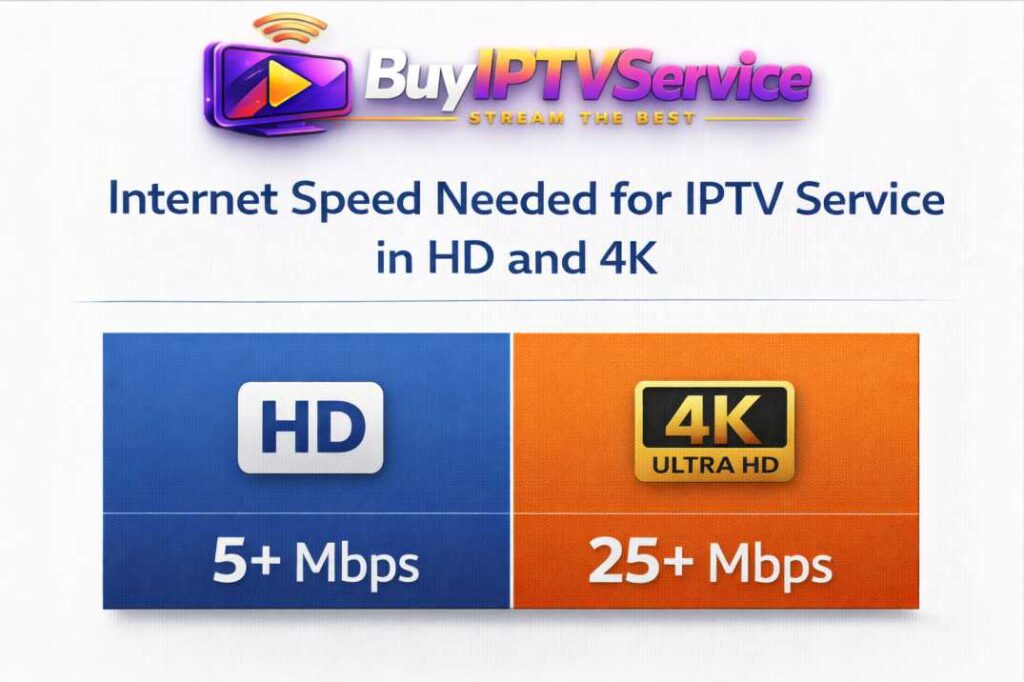
Internet speed deserves a reality check before you subscribe. Official platform guidance from Netflix and YouTube shows that HD and 4K streaming have real bandwidth requirements, and the FCC’s guidance reinforces that household usage matters. So before paying for any iptv service, run a speed test, think about how many people stream at once, and make sure your home network is strong enough for the quality level you expect.
Support is often ignored until something goes wrong. That is a mistake. In practice, a provider with decent features and excellent support will often create a better experience than one with a bigger feature list and no real help. Look for setup assistance, clear contact methods, and realistic support expectations.
A trial period or refund policy also lowers risk. Good buyers do not just ask, “How many channels are included?” They ask, “What happens if the service does not work well on my device or network?” The best iptv service pages answer that question before the customer has to ask it.
Finally, pay attention to everyday usability. Search, favorites, clear categories, an electronic program guide, catch-up access, and easy navigation often matter more than flashy marketing claims. A provider that feels simple and stable every day usually beats one that sounds huge but feels messy.
Top Services for IPTV Service: 3 Types Worth Comparing
The safest and most dependable category is the legal live-TV streaming bundle. These services are usually built around clearly licensed content and familiar viewing experiences. They may cost more, but they tend to be stronger on compliance, customer support, and long-term reliability. WIPO’s guidance for sports viewing also points users toward official broadcasters and legal sources, which makes this category the low-risk choice for many households.
A second category is the telecom or ISP-based TV package. These services can be a smart fit for homes that value stability, straightforward billing, and bundled internet plus TV. They may not always look as flashy as newer streaming brands, but they often appeal to viewers who want one provider, one bill, and fewer moving parts.
The third category is the niche streaming brand with transparent policies and clear rights information. This type can work well when the company is upfront about its content model, device support, setup steps, and customer protections. The key word here is transparent. The deciding factor should never be marketing hype alone. It should be proof.
When people search for the best iptv service, this is where many go wrong. They look for the loudest promise instead of the strongest fit. The smarter approach is to compare service type, support quality, device compatibility, and trust signals first.
FAQs About IPTV Service
Is IPTV service legal?
IPTV as a technology is legal. The legal issue depends on whether the provider has the rights to distribute the channels, shows, films, or sports it offers. WIPO explicitly encourages people to choose legal viewing sources, and Europol’s enforcement announcements show that authorities do act against illegal IPTV operations.
What internet speed do I need for IPTV service?
The answer depends on the resolution and the number of simultaneous users in your home. Netflix recommends 3 Mbps for 720p HD, 5 Mbps for 1080p, and 15 Mbps for 4K. YouTube lists about 20 Mbps sustained speed for 4K UHD, 5 Mbps for 1080p, and 2.5 Mbps for 720p. In everyday use, planning for extra headroom is smart because most households are doing more than one thing online at once.
Can I use IPTV service on multiple devices?
Many streaming ecosystems support multiple device types, but simultaneous viewing depends on the provider’s own rules. A service may allow login on several devices while limiting how many can stream at the same time. That is why it is important to verify both compatibility and concurrency before subscribing. YouTube’s official device-support documentation shows just how broad device support can be on modern streaming platforms.
Conclusion
Choosing an iptv service is not really about finding the loudest sales page. It is about finding a service that matches your viewing habits, works on your devices, performs well on your internet connection, and operates with clear policies and legitimate rights. The best buyers look past raw channel counts and focus on what actually shapes long-term satisfaction: reliability, support, transparency, and ease of use.
From an SEO point of view, that is also the strongest way to rank for iptv service. Solve the reader’s real problem. Explain the technology clearly. Be honest about bandwidth and device requirements. Show why trust and legality matter. Then guide the visitor to the next step with helpful internal links, practical FAQs, and a mobile-friendly page structure.